Websites for builders and developers
Websites for builders and developers: project pages, floor plans and site-visit enquiries
Every project needs its own page: configurations, floor plans, amenities, location, RERA details and progress. A developer website gives each project that page, with a company story that ties them together.
The problem
What gets in the way for a builder
Each project needs its own page
Ad campaigns, brochures and WhatsApp forwards all need a project page to point to, not just a company homepage.
Details keep changing
Price lists, inventory, floor plans and offers change during a launch, and old versions keep circulating.
Brochure and visit requests handled by hand
Requests come through calls and messages, and follow-ups depend on someone's notebook.
Buyers want proof of progress
Buyers ask for construction updates and registration details before they trust a project.
What to include
What your website should include, and why
- 01
A reusable project page
Overview, configurations, floor plans, amenities, location and a RERA block, in a layout every project shares.
- 02
A RERA block on every project
The registration number and the state authority's website, plus any QR code your state requires, shown together.
- 03
Floor plans by configuration
Plans for each unit type with carpet areas, so buyers compare like with like.
- 04
Construction progress updates
Dated photos and milestones show buyers what's been built, project by project.
- 05
Brochure and site-visit requests
A WhatsApp request names the project and configuration, so your sales team knows exactly what to send.
- 06
Completed projects, if real
Delivered projects with photos and completion years show the track record buyers look for.
Most builder websites are built as business websites; other options are landing pages and custom websites.
Suggested structure
The pages a builder website usually needs
A starting point, adjusted to your business when we plan your website.
01Home
- Ongoing projects
- Completed projects
- Plan a visit
02Project page
- Overview
- Floor plans
- RERA details
03Amenities and location
- Amenities
- Connectivity
- Map
04Construction updates
- Milestones
- Dated photos
05About
- Company
- Delivered projects
- Contact
What a project page should include
Buyers and their families read a project page closely. A complete one includes:
- RERA registration number and the authority's website
- Configurations with carpet areas
- Floor plans for each unit type
- Possession date as registered with RERA
- Amenities that are actually in the approved plan
- Location and connectivity, without exaggerated travel times
- Construction status with dated updates
- Brochure and site-visit request buttons
RERA requirements for project advertising
- RERA requires project advertisements, including websites, to show the project's registration number and the authority's website address.
- Some states add requirements such as a QR code linking to the registration; confirm with your state authority.
- Label renders as artist's impressions, and show only amenities that are in the registered plan.
This is a summary to plan your website around, not legal advice. Please confirm the rules that currently apply to you; we build the website around what you confirm.
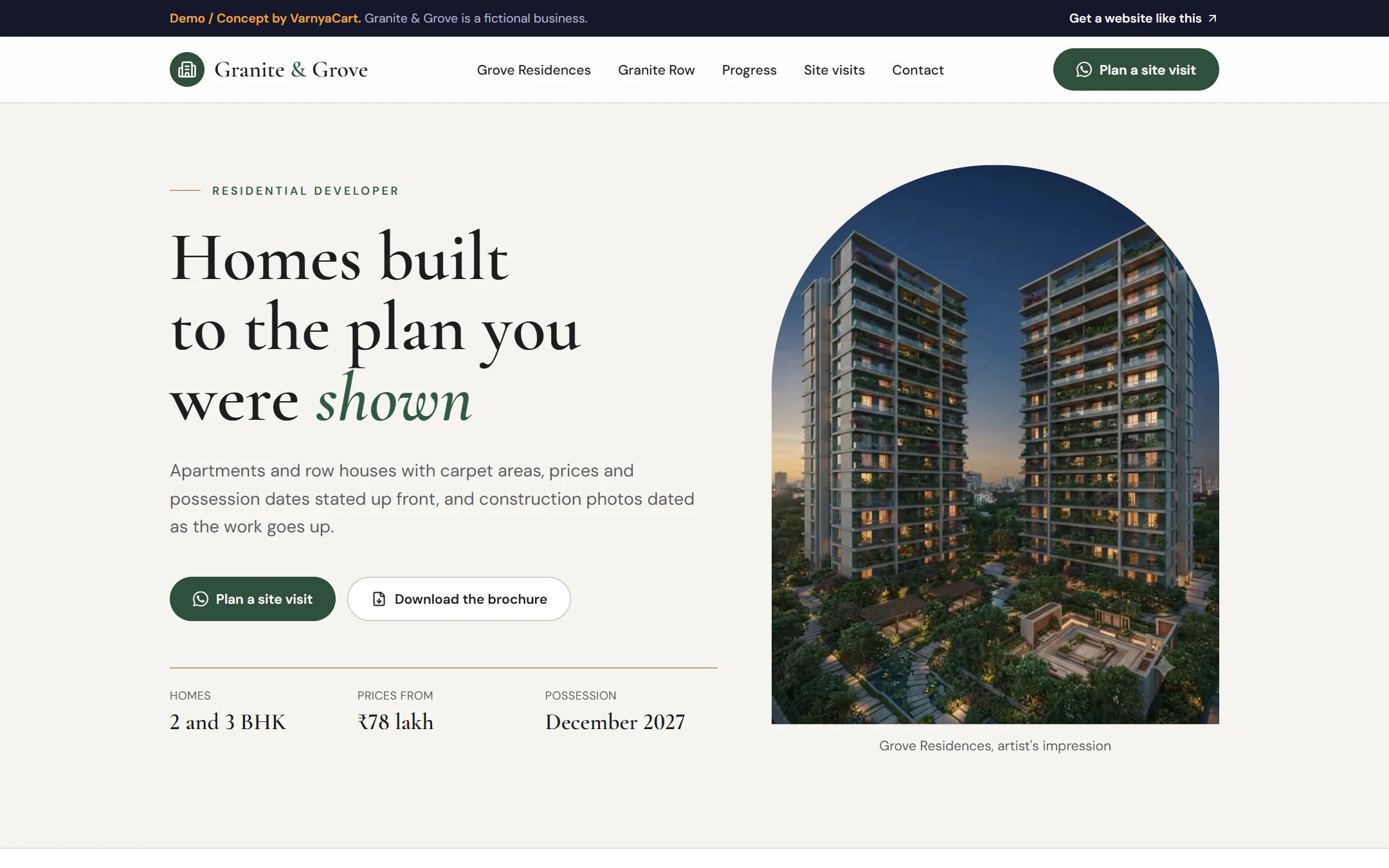
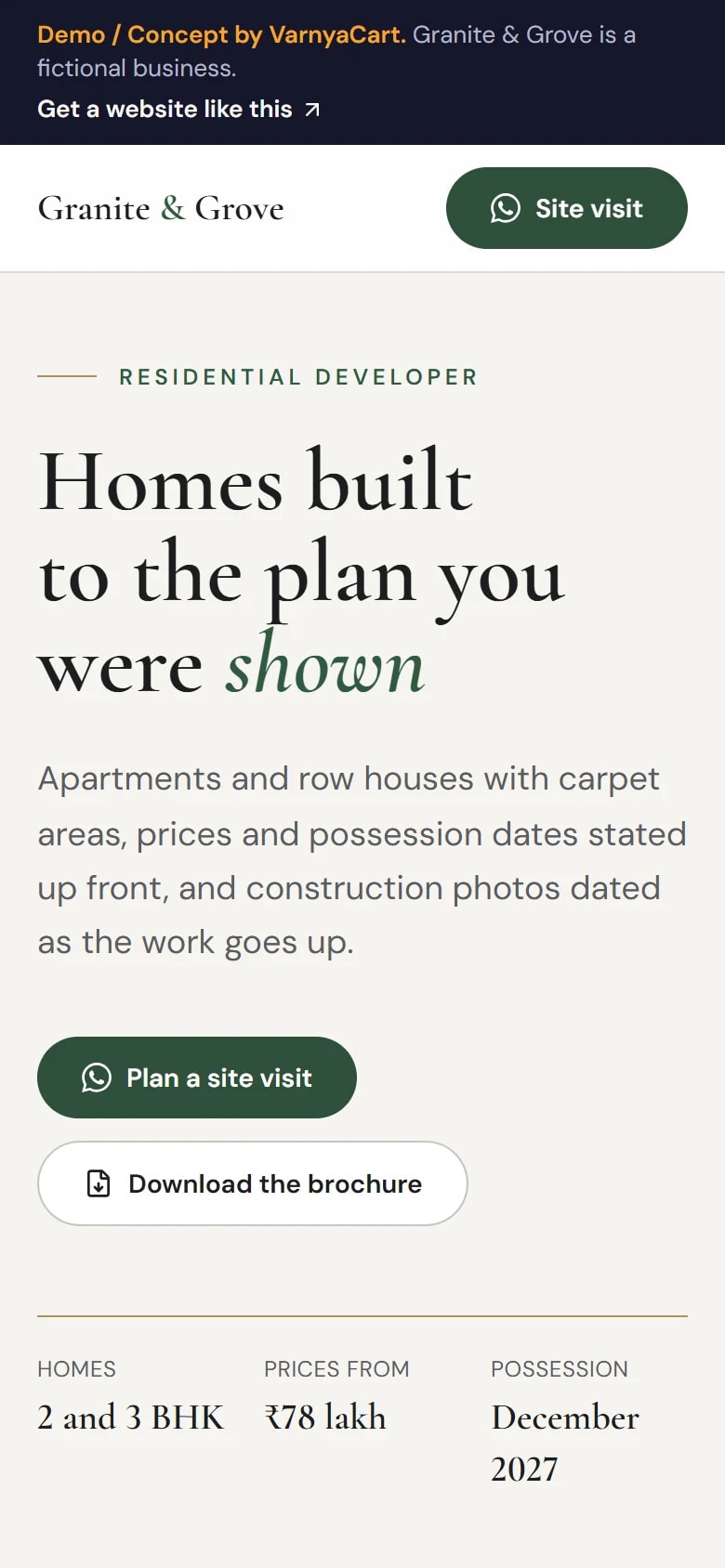
See the pattern in a working demo: Granite & Grove
Granite & Grove is a fictional real estate developer we built to show these ideas in practice. It isn't a client project.
How we build it
Five steps from brief to launch
- 01
Share your requirements
Tell us about your business, the pages you need and the features you want.
- 02
Plan the website
We organise your content, page structure and features.
- 03
Design and build
Your website is designed and built to the agreed requirements.
- 04
Review
You review the website and give feedback within the agreed scope.
- 05
Launch
After final checks, your website goes live.
Websites start at ₹2,999
The final price depends on the number of pages, features, integrations, custom functionality, content requirements and design complexity.
Digital marketing for builders & developers
Then help more customers find you
Once your website is live, we can set up your Google Business Profile for Google Maps, post on your Instagram and Facebook, and run Google, Facebook and Instagram ads that bring enquiries to your WhatsApp.
Launch offerThe All-in-One Digital Marketing Package for ₹4,999, for the first 20 businesses. Ad budget is separate and paid directly to Google/Meta.
FAQ
Questions builders and developers ask
Does each project need its own page?
Yes. Each project has its own registration, plans and buyers, and ads and brochures need a page to point to. A shared layout keeps every project page consistent.
Which RERA details must appear on a project page?
At least the project's registration number and the RERA authority's website; some states require more, such as a QR code. Confirm your state's current rules.
Should buyers share their details before downloading a brochure?
If you ask for details first, say why and how they'll be used, and get consent. Alternatively, keep the brochure open to everyone and invite site-visit requests instead.
Can we run ad landing pages for each project?
Yes. A focused landing page per project or campaign works well for ads, as long as it carries the same RERA details as the main project page.
How should construction progress be shown?
As dated updates with photos and milestones on each project page, so buyers can see when each stage was reached.
Related industries
Websites for similar businesses
Real estate agents
Listing pages with carpet area and RERA numbers, property-specific enquiries and site visits.
Architects
Projects organised by type, galleries that stay fast, your process and registration details.
Interior designers
A portfolio by room and style, honest render labels and enquiries that include a budget.
Let's plan your builder website
Tell us about your business and what you want customers to do. We'll suggest the pages and features that fit.